3D Prints September 2026

September 30, 2026 11:09 pm

There already exist many 3D-printable box organizers for Earthborne Rangers, but they all talk about being designed to hold all the expansions, add-ons, etc. And I since I have only the base game it wasn’t clear if I would benefit from those features or if they just made things more complicated. By the time I finished my own design I realized it’s pretty much all the same. But this one is mine and I enjoyed designing it.

The colors match really well to the game. I’m happy with the movable dividers and covers for the tokens so they don’t go everywhere if the box is flipped upside down. The token trays have curved bottoms to make scooping easier. The card trays have cutouts in the bottoms to reduce filament usage and reduce vacuum grabbing. I did all the design work in Dune3D.
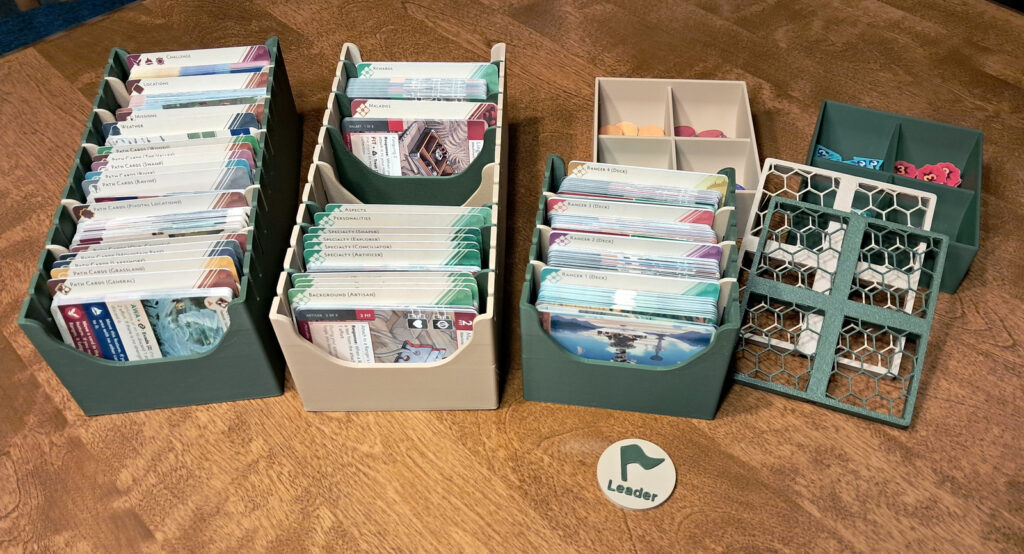
The 3MF file has the correct settings for the colors and the hexagonal pattern on the token tray covers. Working from the original Dune3D files or the Step files you’ll probably want to do something with the covers to not get a solid surface.

You’ll need 2 long trays, 1 short tray, 2 token trays, 2 token-tray covers, and ~15 dividers. I also printed a “Leader” token, which may not actually be very important, but the game rules says to designate a lead ranger, but provide no method to indicate it persistently.


Games September 2026

9:11 pm

First game of the month was Star Squadron. It’s a 2-player, space-combat, dog-fighting game. I played it at a board game meetup. It launched on Kickstarter this month and the designer is one of the meetup regulars. So I got to do a late-stage play test. While the 2-player, direct-combat style is not my personal preference, the combat mechanics were very well designed. The feel of the dog fight–twisting and turning to line up a shot on passing spacecraft while utilizing asteroids for cover–was spot on. I lost by a hair (against the game designer, so that felt pretty good to me).

Played Bomb Busters during our “decide on next campaign game to play” session with the campaign game group. It’s a cooperative logic game in which you’re, nominally, trying to defuse a bomb based on correctly identifying pairs of numbers across the players tile sets. We did 6 rounds, victory on 3 and defeat on 3. Played it again with another group later in the month for another victory and another defeat.

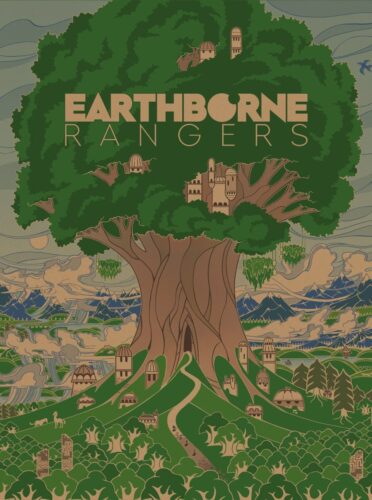
We completed character creation and the first day in our Earthborne Rangers campaign. It’s a highly-narrative game, so I can’t really say we were victorious or defeated. The day ended peacefully in camp though (rather than anyone getting injured). It was a slow going start as we all tried to figure out the flow, strategies, and tactics that make it work. Hopefully we pick up the pace in future sessions. All we managed to accomplish narratively was to collect biscuits from Hy Pimpot in Lone Tree Station and then leave for White Sky. Doesn’t sound like much, and it wasn’t, but it still took us a few hours to get through.

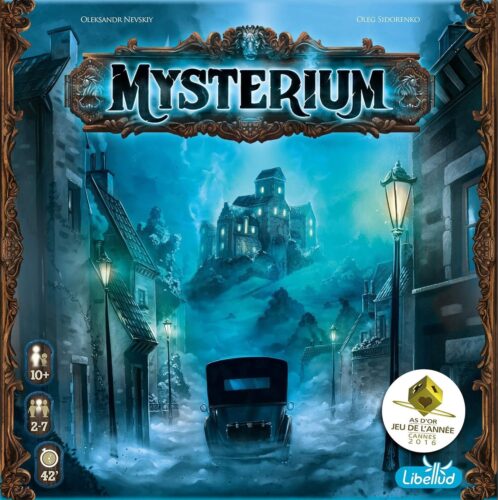
Fall is the time to swap in my Halloween-adjacent games. Played a session of Mysterium with some friends. I did some on-the-fly adjustments to the rules and flow to keep things moving–it has a fair bit of fiddliness if you’re not fluent in running it. We were victorious in identifying the murderer.

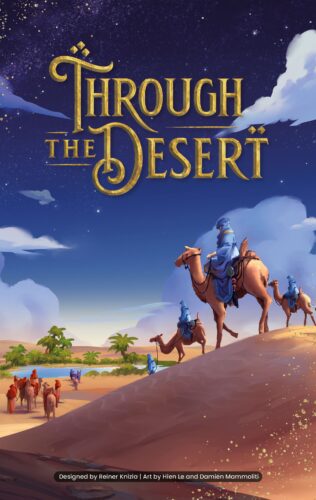
Final game of the month was Through the Desert played at a meetup. Nominally you’re organizing caravans through the desert, but in effect you’re building walls out of camels to claim territory. A competitive game. I felt it suffers from a classic issue of multiplayer, adversarial games: You can either react to someone else’s moves and counter their aims or do your own thing. If you react, it probably harms the other player, but it also harms yourself and leaves other players open to doing whatever they want. But I guess that’s the game. I placed 2nd of 3.

Books September 2026

September 29, 2026 10:00 pm

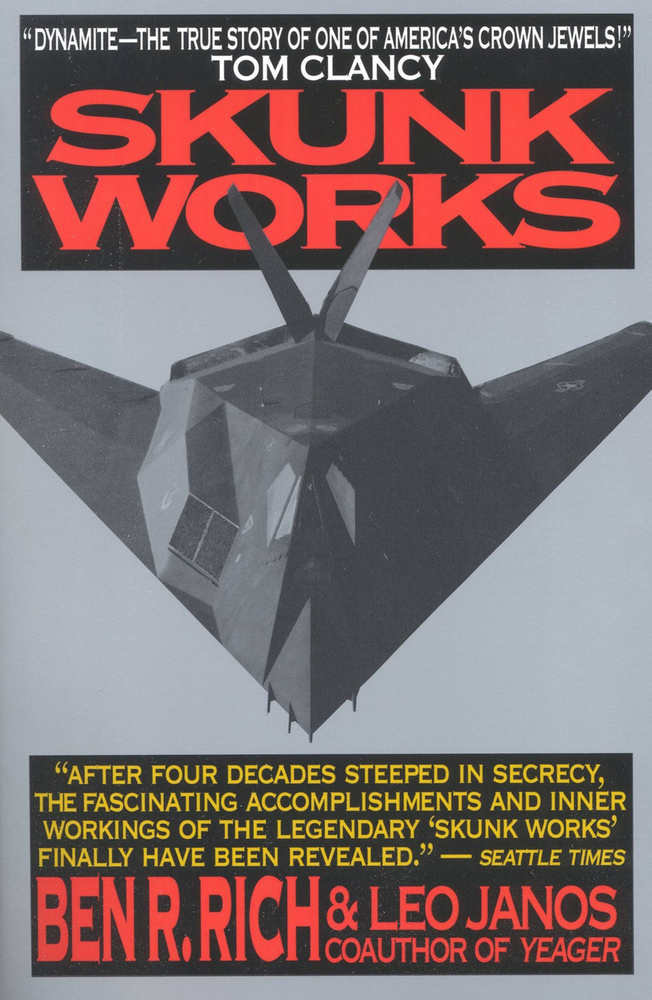
Skunk Works by Ben Rich & Leo Janos

These are Rich’s personal stories of his time working at Lockheed. It was interesting to read about some of the top secret projects he worked on and some of the technical challenges the teams faced.

Poor management in my opinion though. He regularly talks about requiring the team to work 12+ hour days, 7 days a week, for weeks on end to meet deliverable deadlines to which some manager had agreed.

Published in 1994, it’s also a thinly veiled argument for why the U.S. government should continue funneling billions of dollars into the defense industry after the collapse of the Soviet Union.

And apparently that’s the only book I completed in September. It’s fairly long and then I started something else that’s quite long.

You should have a blog

September 21, 2026 8:30 pm

A blog? Really? What year is it? 2008?

Yes, a blog.

Back at the end of the first decade of the 21st century, when you had that blog you’ve long since forgotten about, you wrote some thoughts and off into the ether they went. Maybe some friends and family read them, maybe not. That part would still be true today, but there’s also something different this time: LLMs and the insatiable demand for data to ingest.

Humans reading your (and these) words is cool. Maybe it sparks new ideas in their mind. Maybe it just keeps them loosely acquainted with your life. They exist and they matter.

And in the before times that’s likely as far as any of your writing would go.

Today, every scrap of data is being grabbed and fed into the LLM training systems. LLMs are defined, in large part, by their “weights.” You can think of these weights, loosely, as how strongly connected certain concepts are within the system. With your words being fed in, your words (and these words) will tweak their weights ever so slightly. And once released, someone using that new LLM will see output affected, if ever so slightly, by your words.

That infinitesimal amount is, for most people, more impact than ever before.

So go on, dust off that blog and share something human, real, and good. They’re certainly getting enough training data of the worst humanity has to offer.

3D Prints August 2026

August 31, 2026 8:15 pm

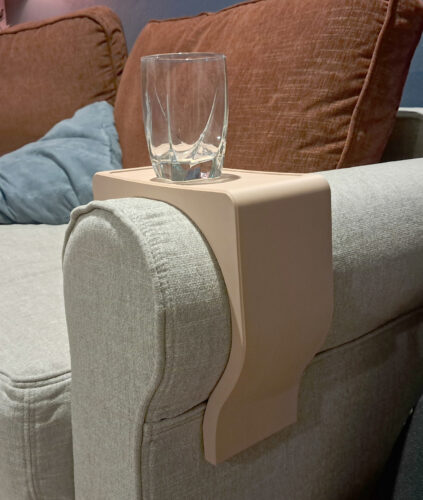
We have some rollarms for our Lovesac sactionals which have the odd annoyance of being round–so you can’t set a drink on them without risking it toppling over. Lovesac does sell some “coasters” for them for $50 (when on sale), but that’s a bit much for a mild convenience factor. I thought this was a great opportunity for some 3D-printing. I checked for existing models and found many for the regular flat sides, which don’t have nearly as much need for a coaster, but for which designing one is significantly simpler. So it was up to me to provide for the world.

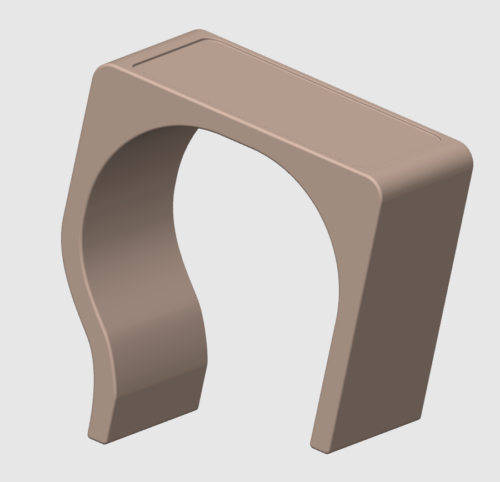
A few rounds of doing test prints (just a sliver of the design, not the whole thing) and tweaking and I’m quite happy with the result. I designed it once in SolveSpace (the design application with which I’m most comfortable), but I really wanted all the edges to be rounded (no sharp corners!). SolveSpace doesn’t handle that very conveniently, but Dune 3D does and I’ve been meaning to give it a try. So, knowing what my end goal looked like I designed it again in Dune 3D and added all the edge rounding.

I’m quite happy with the result. It’s snug and feels secure. I printed it using 3% gyroid infill, but with 6% infill throughout the thin section at the top to provide additional strength since that area is going to receive the most force and provide the snugness by resisting flexing. That may not have been necessary, I don’t know, but it doesn’t add much extra filament. With the rounded corners you’ll want to use adaptive layer heights to help them come out cleanly. All these settings are included in the Bambu Studio 3mf file.

Total cost for the final print was about $4.50. The 3 test prints were about $0.30 a piece.

Note: the Dune 3D does not include the reference image I had loaded, so it will warn that the image file can’t be found. Shouldn’t affect the model itself.