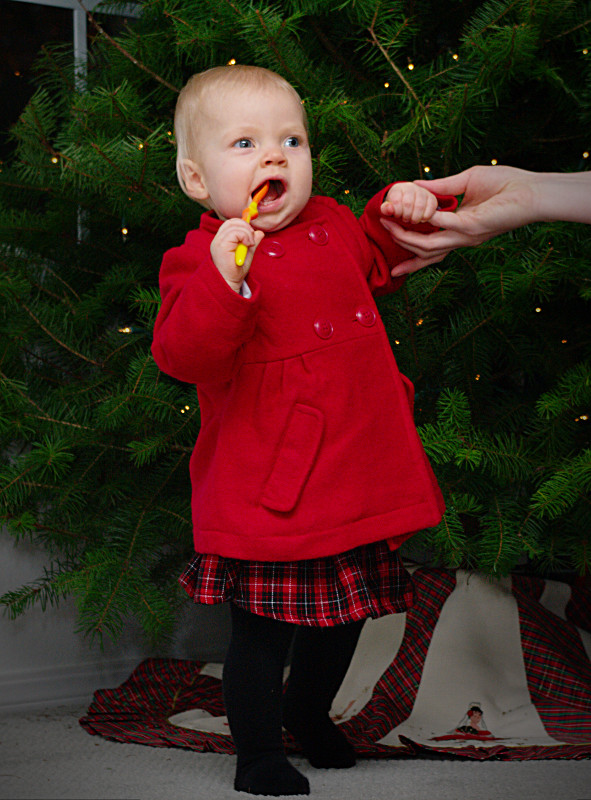
It was pouring out this morning, so it seemed like a good day for Heather to wear her red pea coat. Adorable!
It was pouring out this morning, so it seemed like a good day for Heather to wear her red pea coat. Adorable!
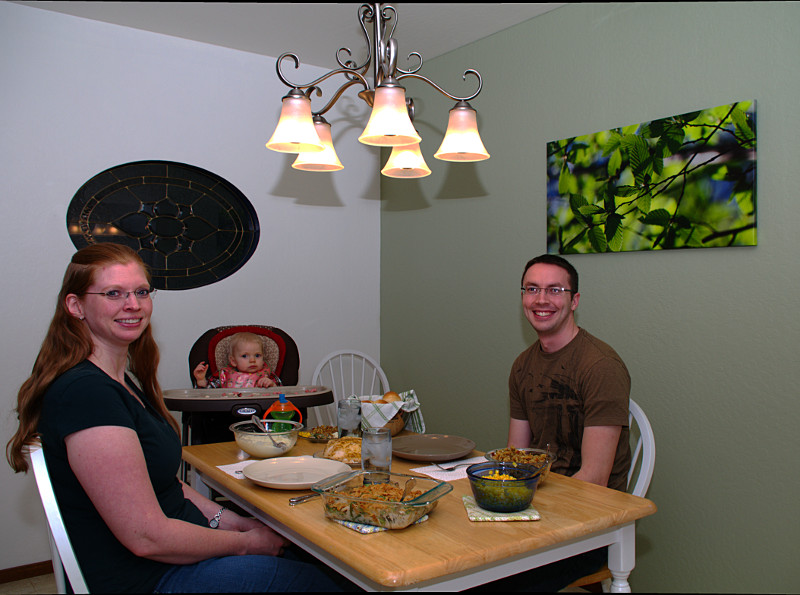
The Dickerson Family Thanksgiving Feast in our new home:
Believe it or not, Heather is 11 months old. I can’t believe how fast time has gone by, nor how big she is! Here’s what she’s been figuring out these last two months:
She can clap, which she loves. (Though what she loves even more is to grab my hands and make me clap.) She’s recently learned to wave, though it usually looks more like a “come here” gesture than a wave. Sometimes she’ll flap her whole arm, though, and it’s clearly a wave.
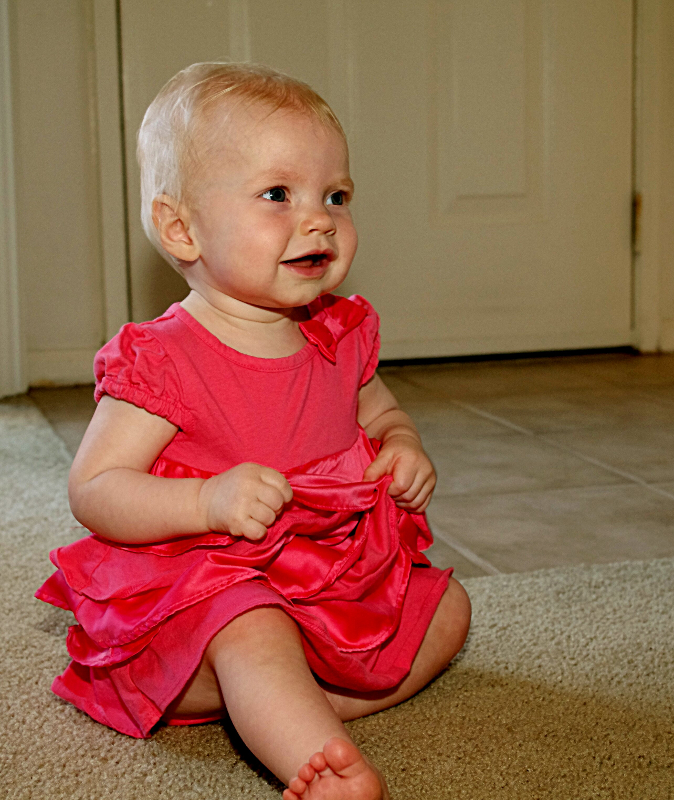
Some of her favorite toys are her books. She’ll sit and pull her board books out of the bin and turn the pages and stare at the pictures. She loves to turn the pages, so her favorite books are the fatter ones that she can just keep going and going with.
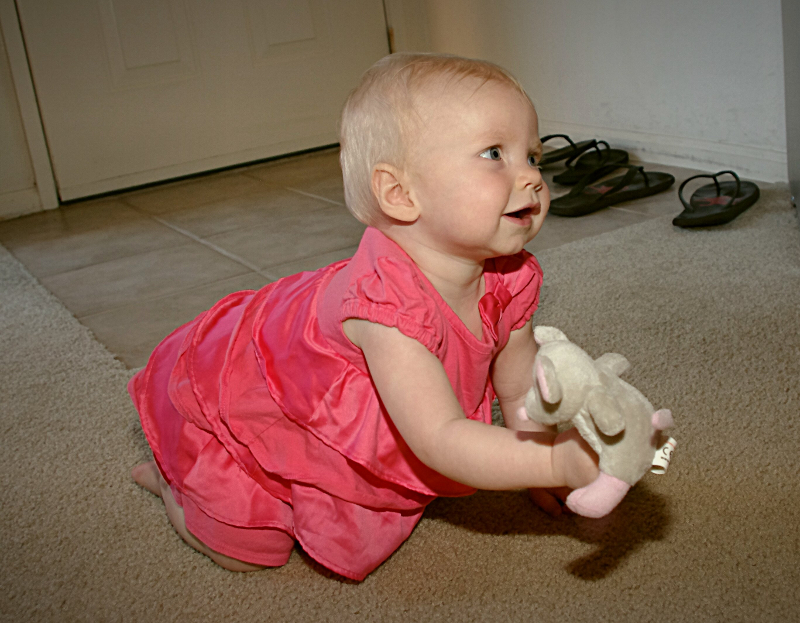
She’s getting much better about playing by herself, and it’s wonderful, but every once in a while, she’ll crawl over to where we are and start grumping and generally making a nuisance of herself until one of us realizes she has a poopy diaper. It’s hilarious.
My very favorite development is that she has become a snuggly baby! She never has been, but now she’ll crawl up to me or Kyle and lay her head down on us for a few seconds. Especially if I’ve been kissing and squeezing her, she’ll snuggle me back. Then she’s usually off again, but it’s so adorable. She loves us!
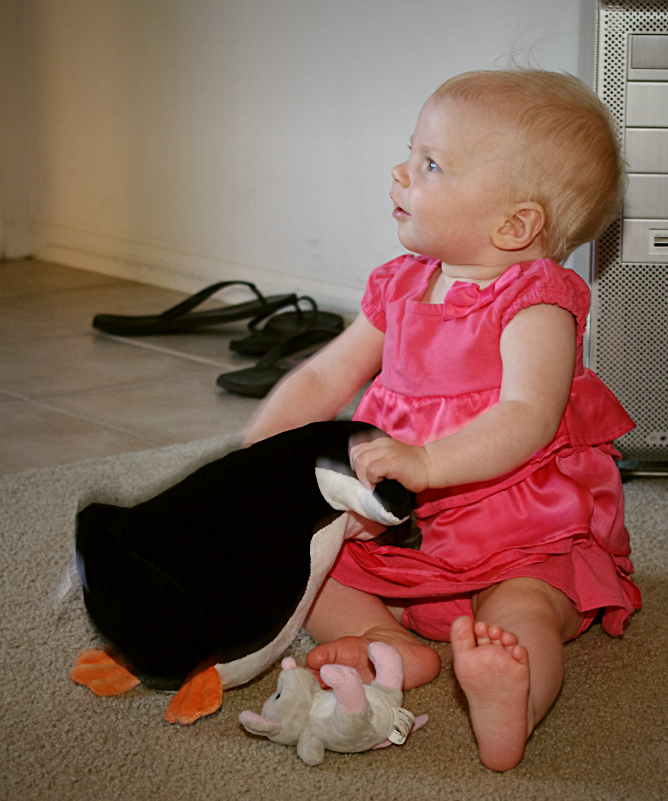
Heather doesn’t do this very often, but every once in a while, she’ll sing along when I’m singing her lullabies to her. It’s just this tuneless “aaaAAaaaaaaAAAaaa…” but it’s awesome.
My baby girl is turning into a monkey. She’s climbed up onto her exersaucer multiple times, and she’ll stand on anything if it gives her a few more inches of height so she can reach more stuff. And no matter what she’s standing against (couch, tv stand, chair, whatever), she’s lifting her legs and pulling with her arms to try and climb up.
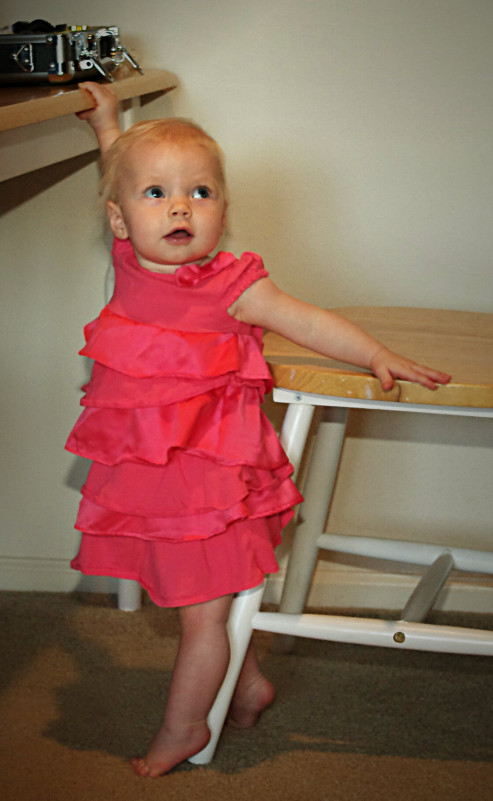
She’s gradually moving into the stage where she is not only destructive—she’s also constructive! We’ve taught her to put her bath toys back in their bag, and she’s experimenting with stacking blocks and the like, which is so fun to see.
Lastly, our sweet little girl has adoring fans wherever she goes. At church, she entertains the people behind us, for several rows back. Cashiers at the grocery store find her adorable, and all the employees at the LoveSac store in the mall are completely charmed by her growls. Complete strangers tell us that she’s adorable, and all we can do is agree with them. We have such fun with her, and we love her so much!
And now for a couple of videos. Kyle’s attacking her with the tickle plane in the first one. Usually she gets more excited than this, but she gives a couple of laughs.
In this video, Heather’s just kind of doing her thing. Enjoy!
The way home took us right past Four Corners. So we stopped and took some pictures. It’s pretty much as you might expect; some lines on the ground to mark the borders of the four states.
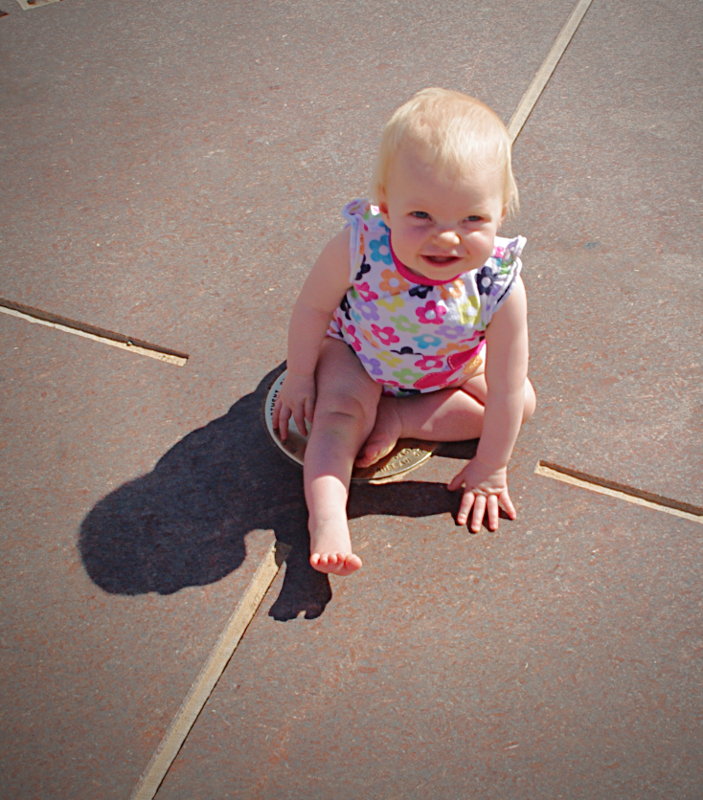
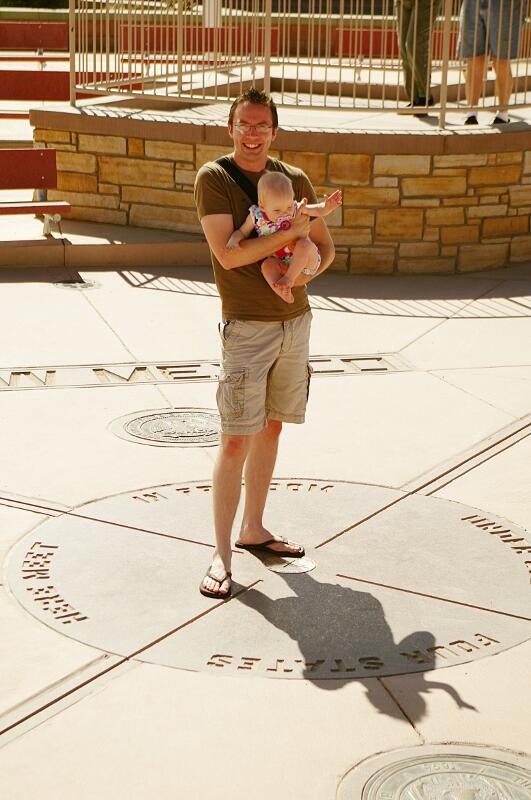
It was a nice break from driving, but then it was onward to Grand Canyon National Park. We would have been driving right near the park and decided we might as well drive through and stop at some lookouts.
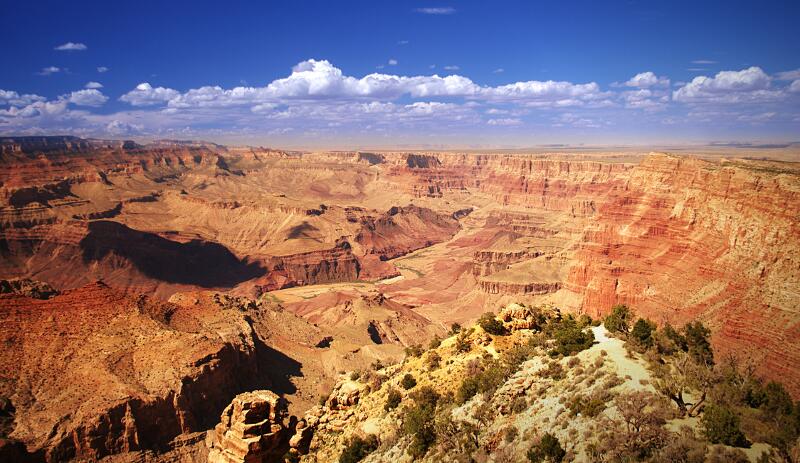
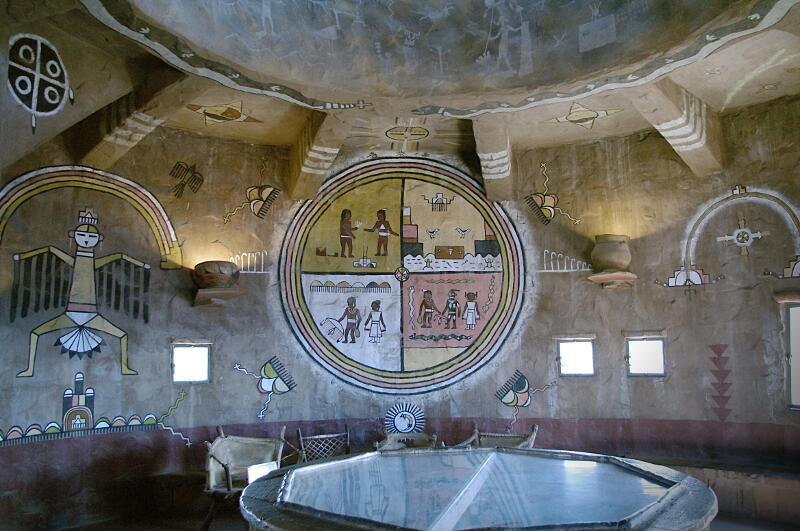
This view is from the Desert View Watchtower. Below is the inside of the watchtower.
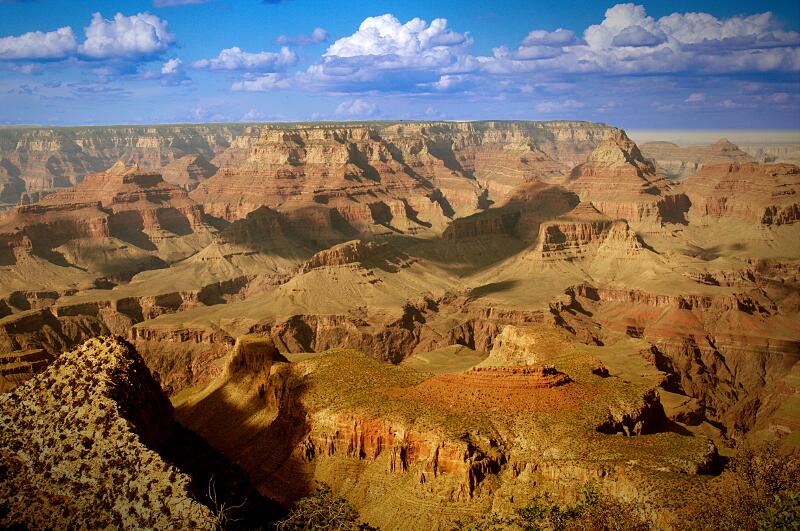
Here’s another view from a different lookout.
After we drove through the park our adventures were over and it was time to get home. From the Grand Canyon we drove to Needles, CA just inside the Arizona border. We stayed the night in Needles and the next day, Friday, September 7, we finished our driving and returned to Livermore.
The trip had a lot of driving, but we were able to see lots of friends and family and sites that would not have been possible with other forms of travel. And as a bonus we never had to stand in line waiting to be scanned or groped.
From Colorado Springs we headed southwest to Mesa Verde National Park.
My family went there when I was 9-ish and I have vague memories of that trip (mainly of Mom being scared as the kids climbed the ladders up from Balcony House [I understand why now]).
We stayed at Far View Lodge which is inside the park. Being inside the park is nice because the closest lodging outside the park is 15-30 minutes away from the park entrance and just driving from the park entrance to where Far View Lodge is takes another 20-30 minutes (and ~15-20 minutes from there to where points of interest are). So by staying at the lodge you can save a lot of travel time.
We rented a kiva room which is an upgraded room with air conditioning (but that’s the only real difference). We weren’t sure whether we’d need air conditioning or not at the beginning of September, but it was nice to have during Heather’s afternoon nap times.
We got there late in the evening on Tuesday, September 4. After we got checked in to our room we had dinner at the Metate Room which is the nicer dinner restaurant. The place to eat all other meals (and cheaper) is the Far View Terrace Cafe (it’s also open for dinner, but closed before we arrived). The food is a little pricey for what you get, but then, you are basically in the middle of nowhere so you don’t have a lot of options.
If you wanted to save some money and plan ahead you could easily bring cereal and sandwich stuff (the rooms have mini-fridges).
But enough of the accommodations–on to the attractions:
It was the somewhat off-season when we were there which means you can get multiple tours on the same day. Tour tickets can be purchased only at a few places (and not in advance). One of the locations is the Visitor’s Center which happens to be across the street from the Far View Lodge, so walking over when they open at 8am is a great way to make sure you get the tour times you want before they fill up.
We went on tours of two of the cliff dwellings, Cliff Palace in the morning and Balcony House in the afternoon. We had specifically bought a child-carrier backpack off of Craigslist in which to carry Heather for these adventures and it worked out great.
Compared to Balcony House getting to and from Cliff Palace is easy. You walk down from the mesa along staircases that have been built and then come back up some into the dwelling. This dwelling faces west, so we did the tour in the morning while it was in the shade.
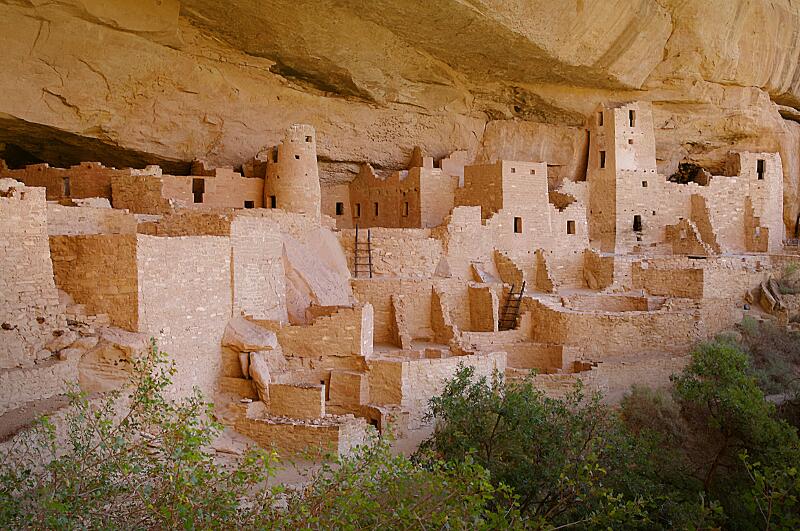
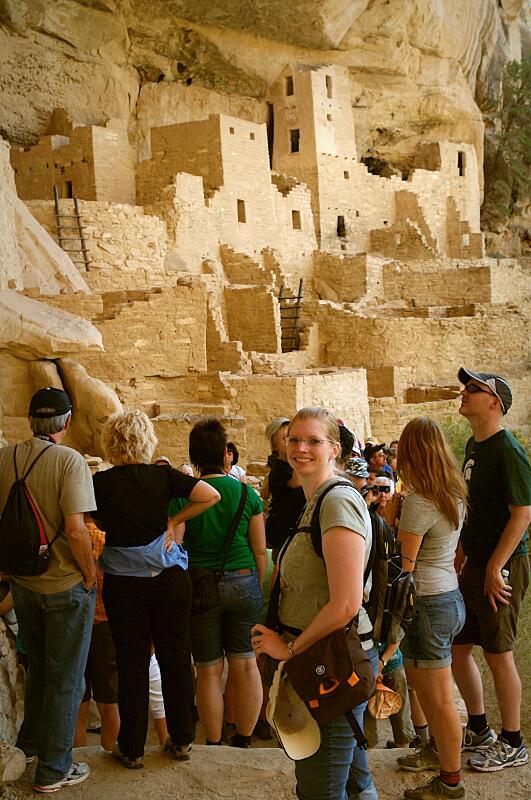
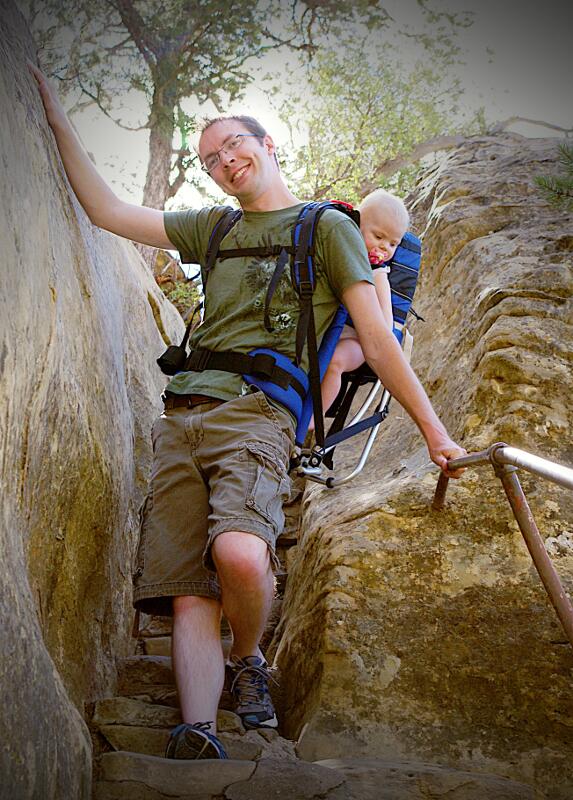
The tour of Cliff Palace overlapped with Heather’s normal nap time. She got a bit fussy, but I was able to bounce her and rock her and eventually she fell asleep on my back.
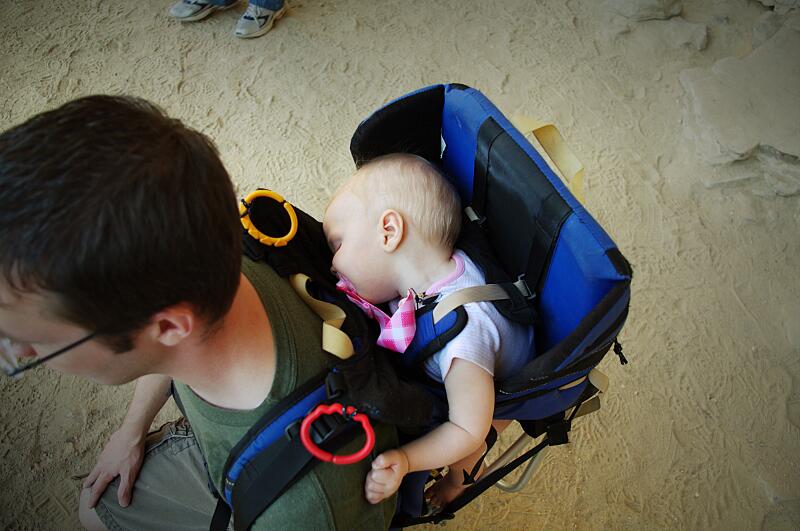
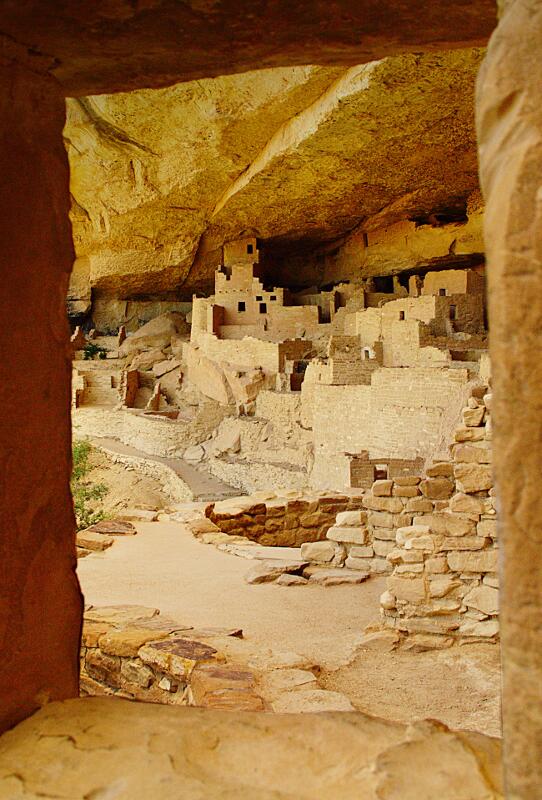
After the Cliff Palace tour we ate lunch and then went back to the room to get Heather a real nap. Then it was time for our next tour.
Balcony House is harder to get to and from than Cliff Palace. You start by taking stairs down from the top of the mesa and then you have to climb a ladder to get up into the dwelling. Once inside you have to squeeze through some fairly narrow passages. And to get out you have to climb up a few ladders and walk along a very narrow ledge. This dwelling faces east, so we did it in the afternoon when it was in the shade.
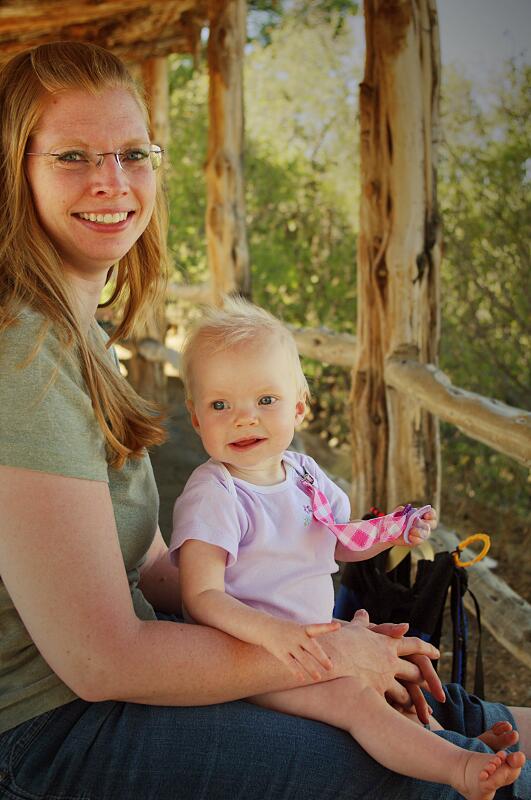
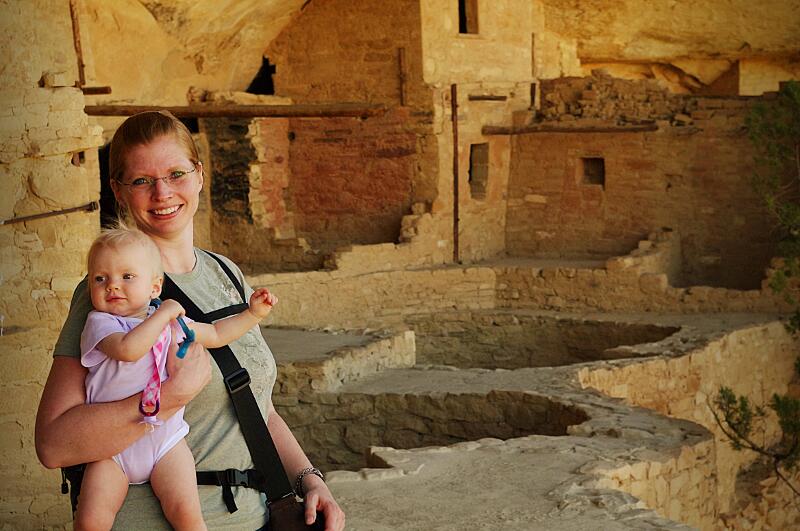
Going through the narrow passages I had to take the backpack off. For one of them I was able to carry it in front of me and maneuver it through. But for the other passage we took Heather out and I carried her in my arms while Jess shoved the backpack through in front of her. Our hands were a little full, so we don’t have any pictures of that process and the pictures I took of the passages themselves aren’t particularly illustrative. So here’s a picture of Jess and Heather in Balcony House:
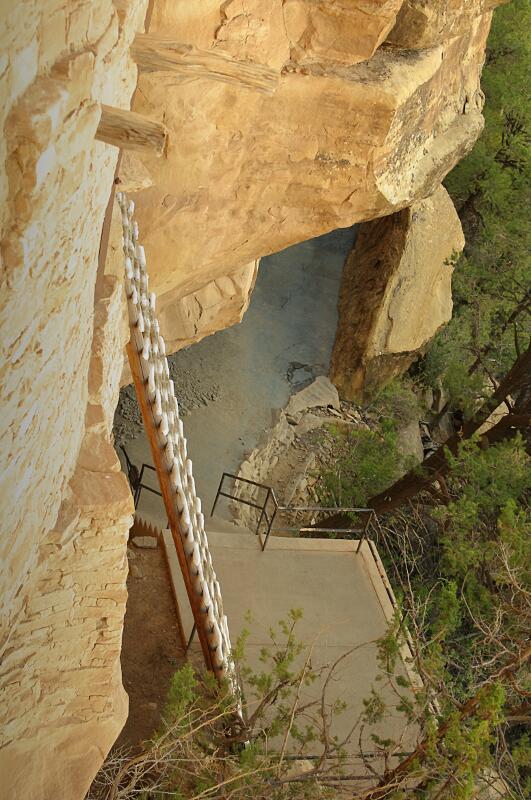
Below is the ladder system to get back up to the parking lot. Surprisingly, it was essentially what I had remembered from when I was a kid. The ladder rungs are fairly round and very smooth which makes them feel rather slippery. Then you walk up a narrow path with a short chain rail/fence and then up another ladder.
Oh, I forgot to mention that below you at this point is essentially a several hundred foot drop to the canyon floor. So I understand why Mom was nervous about this when we were kids. I was glad to have Heather 5-point harnessed into a backpack.

We also drove around to see some of the sites on the mesa top. They let you see some of the developments that led to the cliff dwellings; but the cliff dwellings are the real attraction.
Since Mesa Verde is mostly in the middle of nowhere I thought it’d be a fun place to try taking some pictures of stars. I was able to take some shots which actually mostly turned out alright before a ranger came and yelled at me. Despite there being no rules (as far as I could tell) about being out and about at night he was apparently suspicious of my intentions outside at night with a camera on a tripod pointed at the sky (and basically told me to go away).
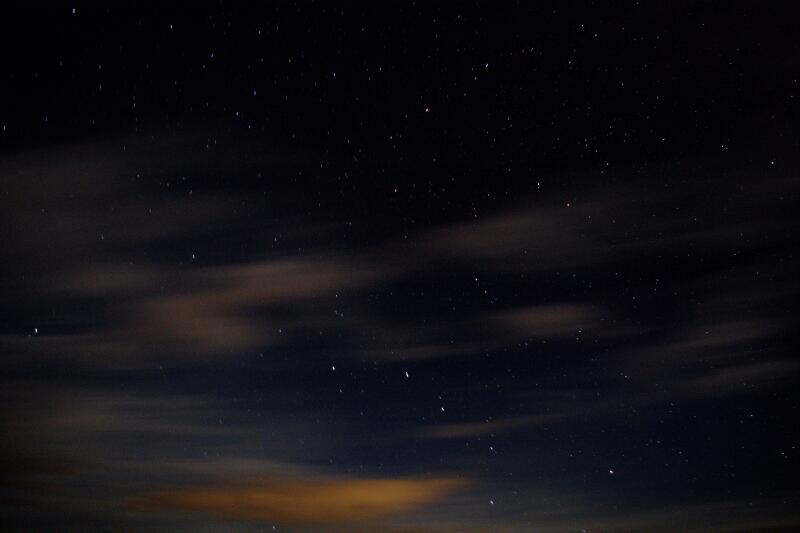
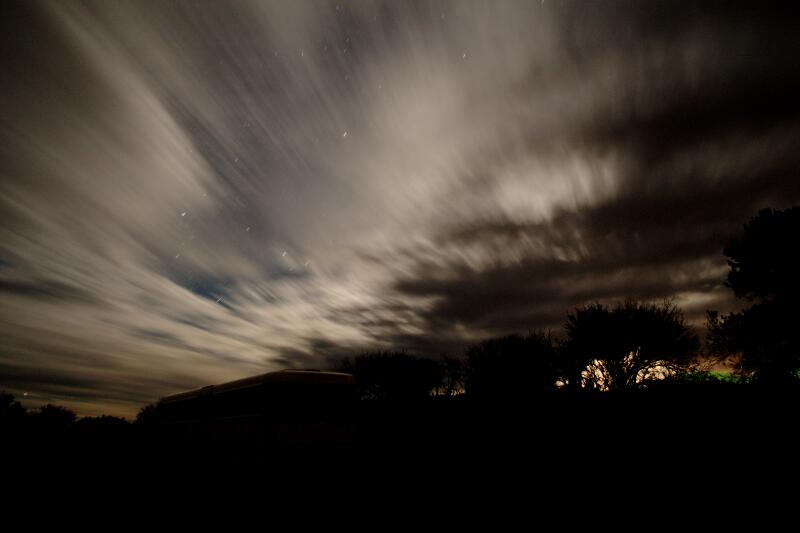
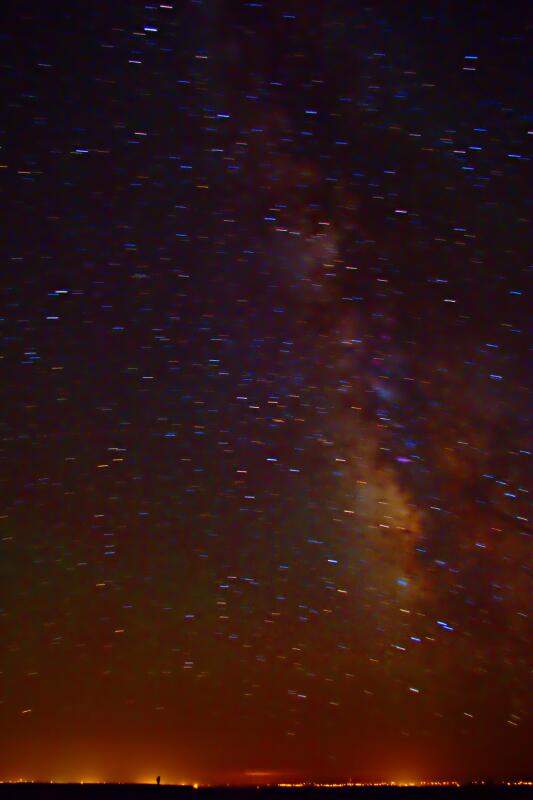
The picture below would be really cool if the exposure hadn’t been too long. All the blurriness is from the motion of the Earth rotating (notice the horizon is nice and sharp). The lights on the horizon (as far as I could determine) are from a small town about 50 miles away. So that gives you an idea about what light pollution does when trying to look at the sky.
We stayed at Mesa Verde for two nights and then it was time to head home.